
Stainless steel panda sculpture
abstract
This paper focuses on a large night-time glowing panda sculpture located in a city public square and explores its multiple meanings in terms of visual language, technical p
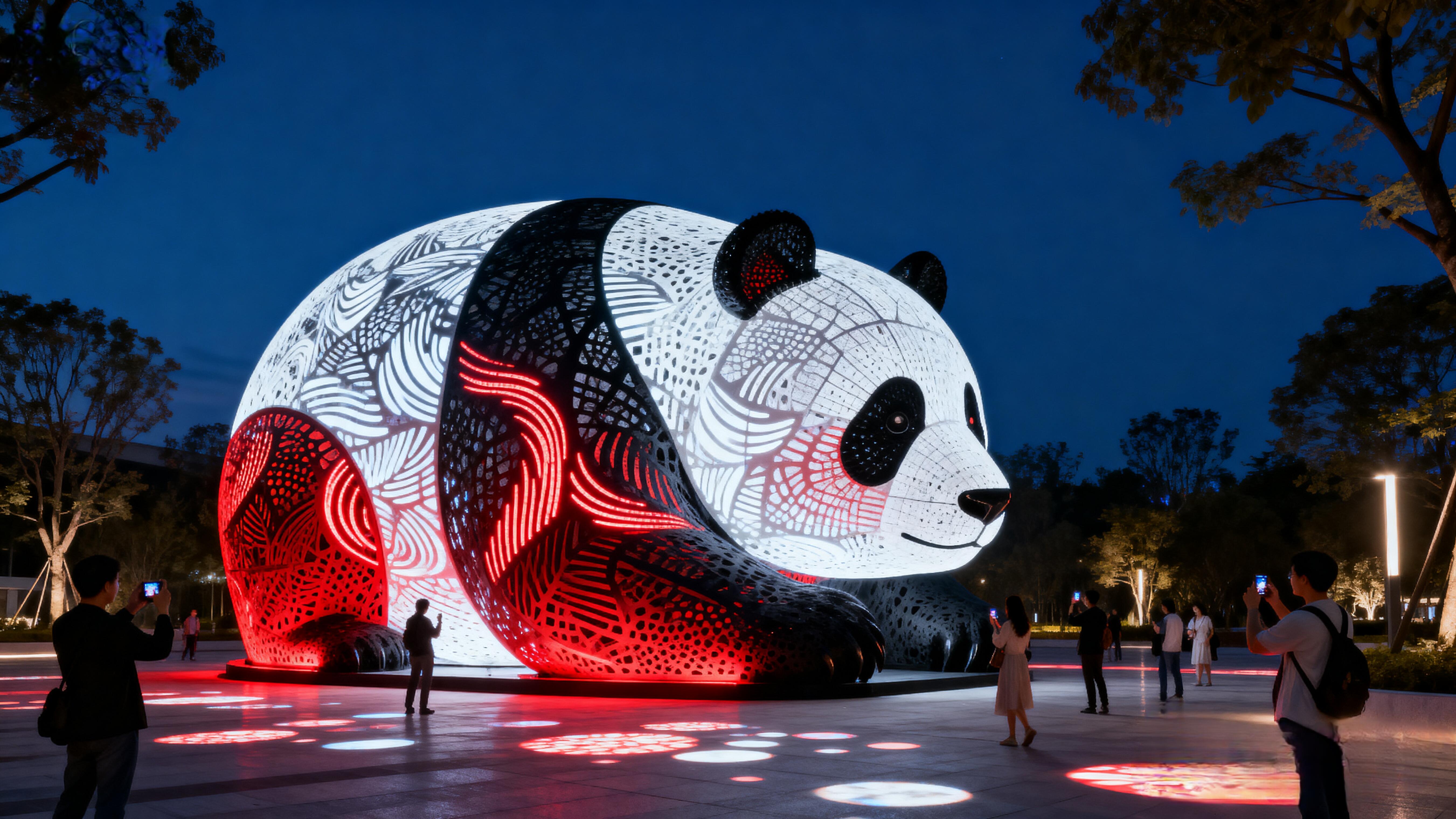
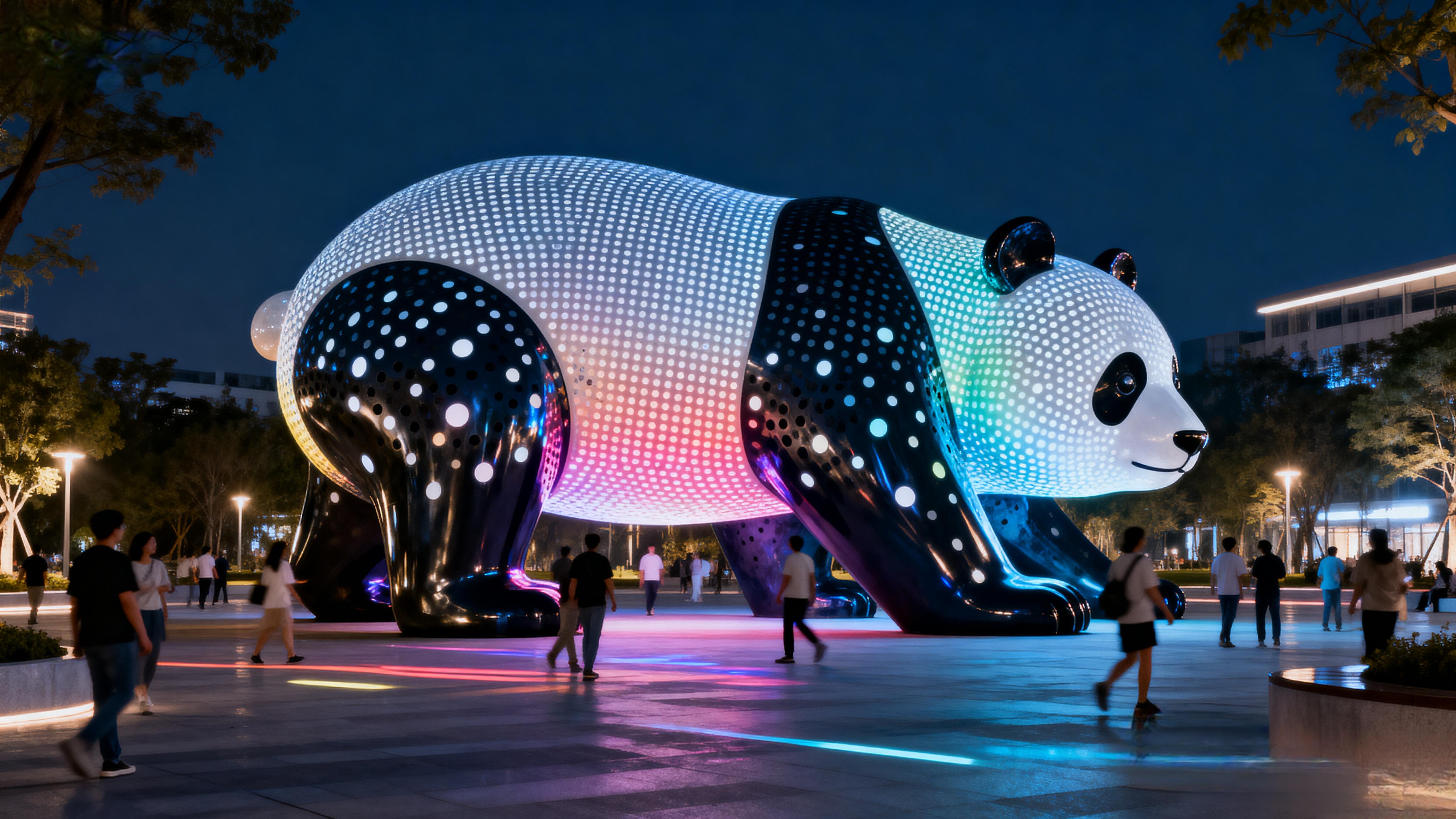
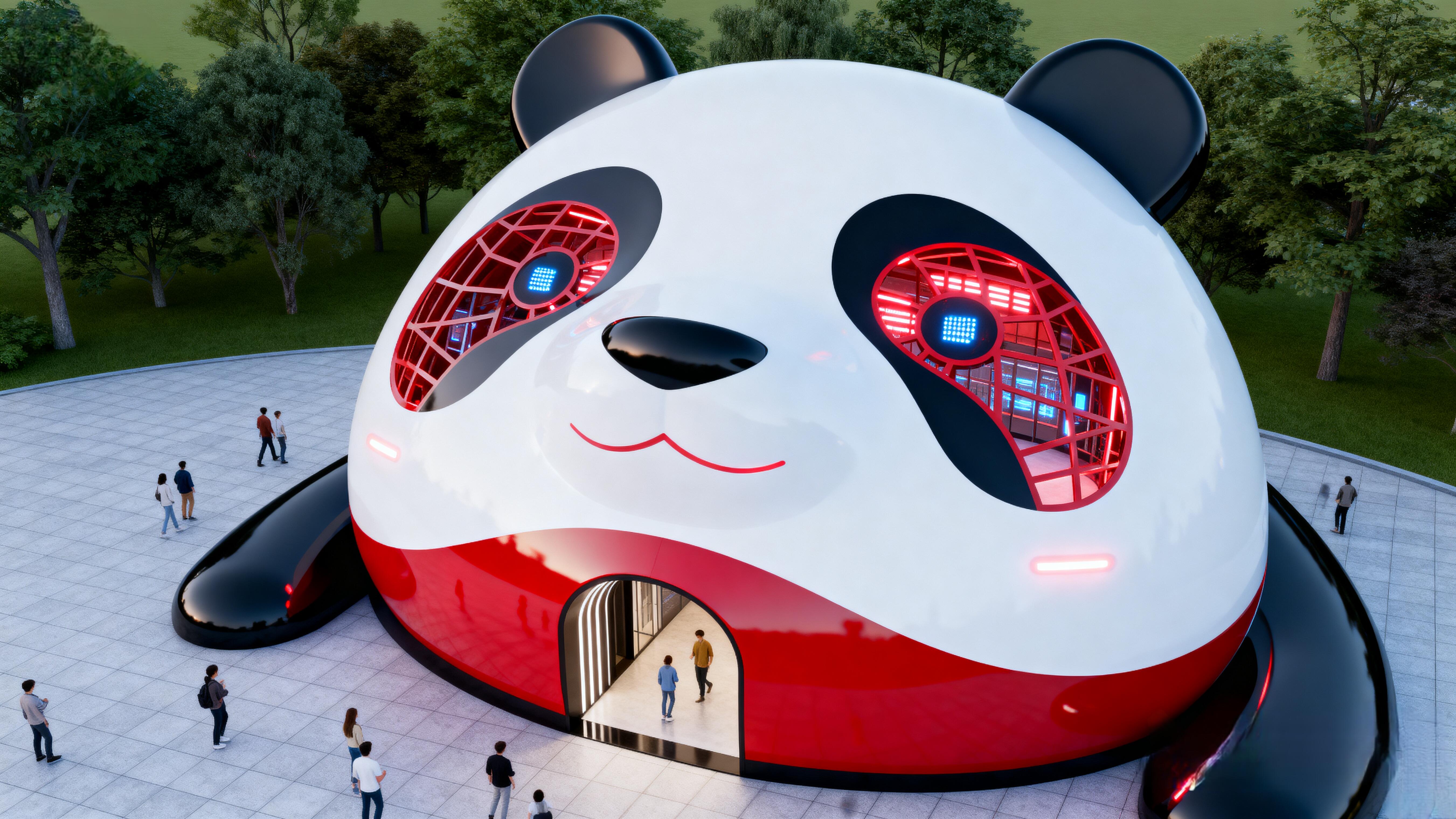
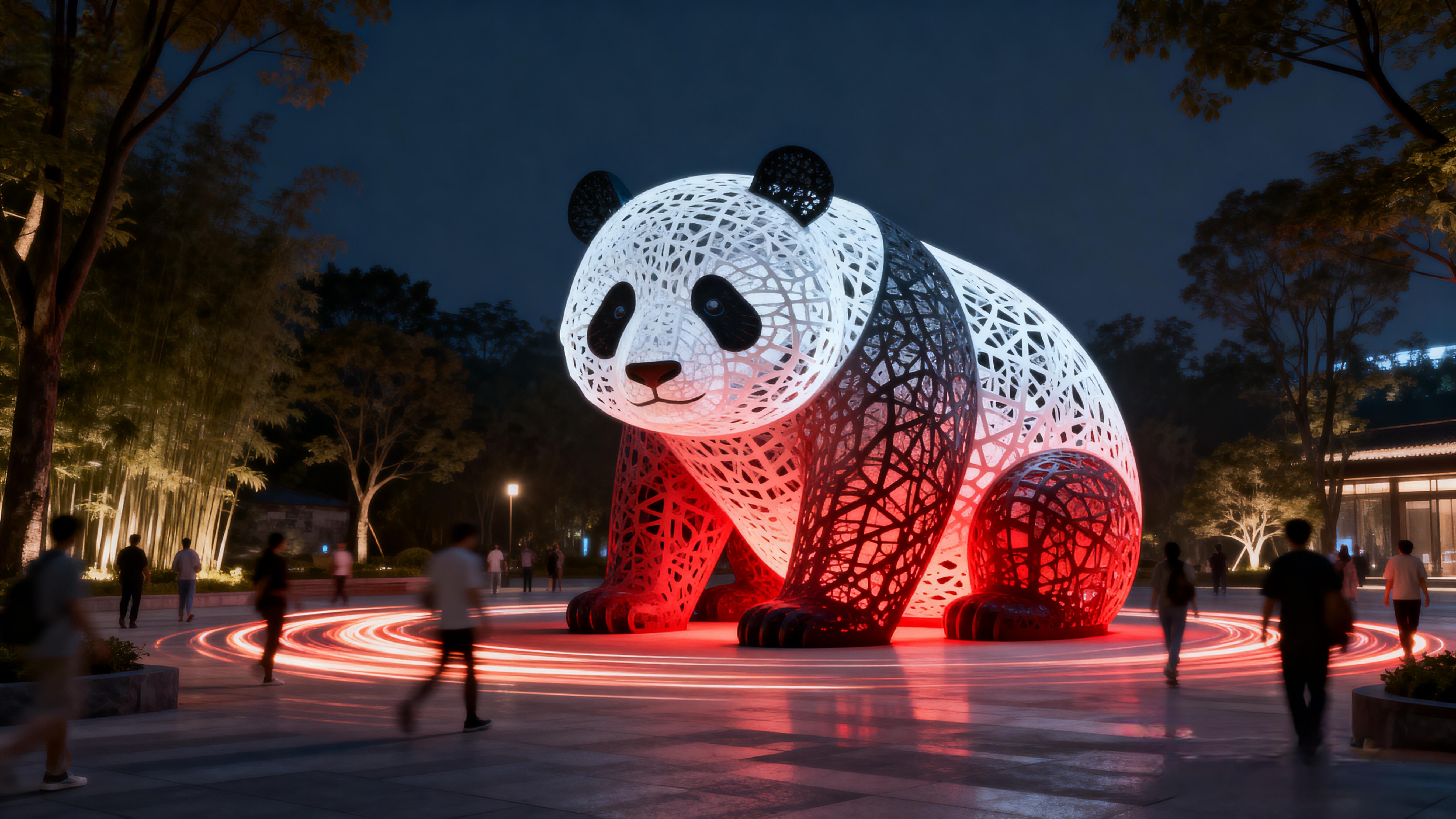
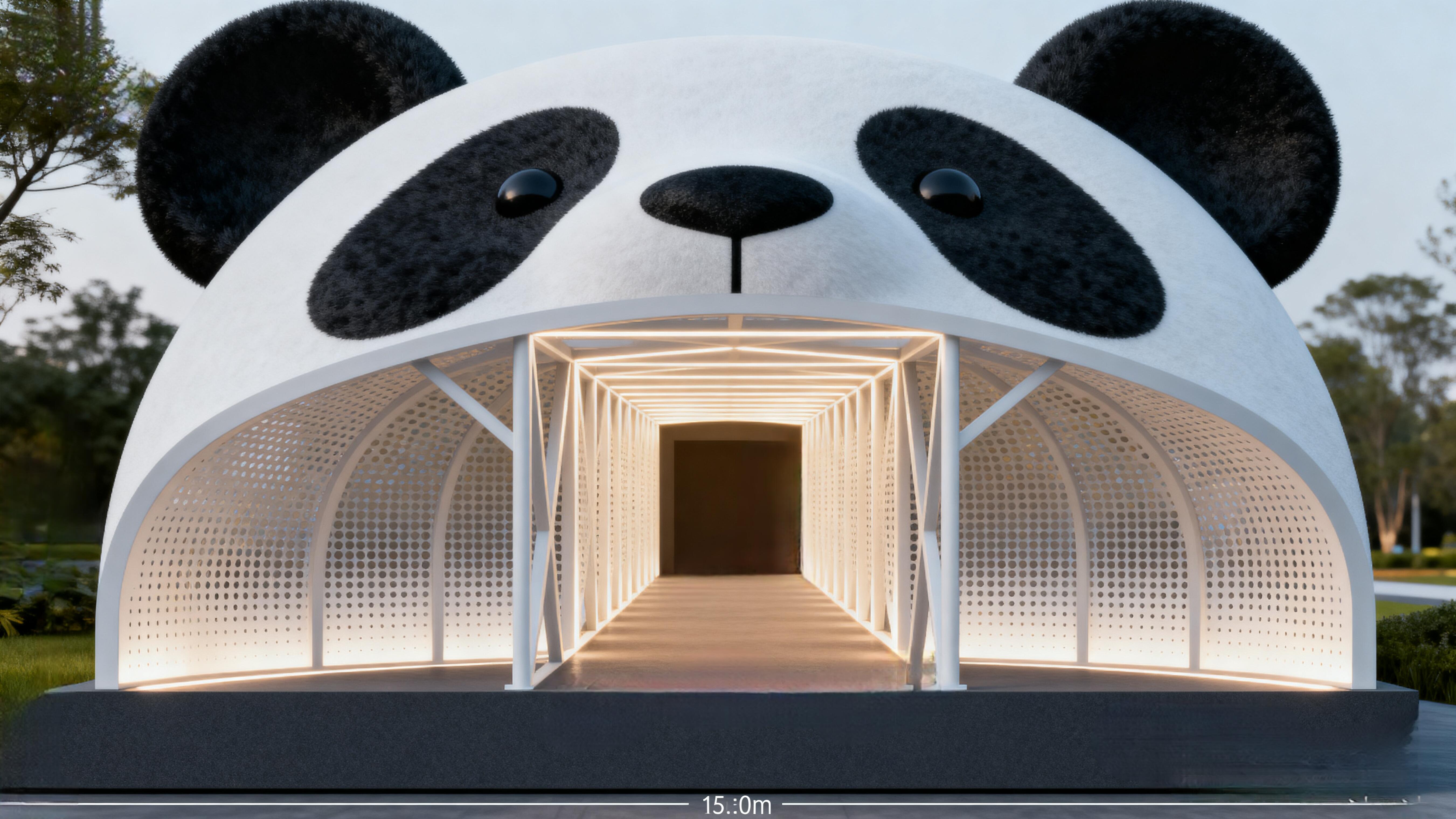
"The Beast of Light and Shadow: Technological Empowerment and Cultural Symbol in Contemporary Public Art-Taking the Glowing Panda Sculpture at Night as an Example"abstract This paper focuses on a large night-time glowing panda sculpture located in a city public square and explores its multiple meanings in terms of visual language, technical realization, cultural metaphor and social interaction. Through the fusion of hollow structures, dynamic projection and LED lighting systems, this work transforms traditional animal images into futuristic immersive art installations. This article starts from the context of public art, analyzes how it uses digital technology to reconstruct the relationship between man and nature, tradition and modernity, and evaluates its social function as an urban landmark and cultural symbol. Research has shown that such sculptures are not only aesthetic expressions, but also an important carrier of scientific and technological humanism in contemporary urban space.Keywords: public art; digital sculpture; light and shadow installation; panda image; urban culture; technology empowerment1. Introduction Against the backdrop of accelerating global urbanization, public art has increasingly become a key medium for shaping urban identity, activating public spaces, and promoting community interaction. In recent years, with the development of LED technology, projection mapping, and intelligent control systems, static sculptures are gradually evolving into interactive and color-changing "living" art installations. The object studied in this paper-a panda sculpture several meters high and glowing throughout the body (see Figure 1) is a typical representative of this trend. It is located in the open square of a city in China. When night falls, it uses red and white light and shadow to project complex patterns, attracting a large number of citizens to stop and take photos, and quickly becoming a check-in point for regional Internet celebrities. This study aims to analyze the technical logic, cultural connotation and social effects behind its art form.2. Visual form and technical composition 2.1 Structural design: hollow grids and organic curves The sculpture adopts a three-dimensional network structure generated by parametric modeling, and the surface is covered with irregular holes and flowing lines, which not only reduces the overall weight, but also provides a penetration path for internal light sources. The outline of the panda's body is highly abstract, retaining distinctive features such as head and limbs, while giving it a non-realistic decorative aesthetic feeling. This design technique of "translucent skeleton + embedded light source" makes the sculpture present a light and modern feeling during the day and transform into a bright light and shadow container at night.2.2 Light and shadow system: dynamic projection and color narrative Multiple sets of RGBW LED strips and high-lumen projectors are integrated inside the sculpture, supporting color gradient, pattern switching and rhythm synchronization under program control. It can be seen from the picture that the panda's body is dominated by white, supplemented by red halo to outline the muscle direction and joint turning, forming a strong visual contrast. A circular light spot is also projected on the ground to simulate panda footprints or bamboo forest reflections to enhance the immersion of the scene. This "internal and external linkage" light and shadow strategy not only enhances the viewing experience, but also implies the reinterpretation of natural forms by technology.2.3 Material selection: equal emphasis on weather resistance and safety Taking into account the long-term outdoor exposure environment, the sculpture shell is made of high-strength aluminum alloy or FRP (glass fiber reinforced plastic), and the surface is sprayed with an anti-ultraviolet coating to ensure lasting and stable color. All electrical components comply with IP65 protection rating and are waterproof and dustproof to ensure safe operation at night.3. Cultural symbols and symbolic significance 3.1 Panda: National Business Card and Global Empathy As a rare species unique to China, giant pandas have long transcended the scope of biology and become a global symbol of peace, friendship and ecological protection. Putting it in public space is not only a confident display of local culture, but also an effective way to spread soft power externally. Although the sculpture does not directly replicate the shape of the real panda, it enhances the affinity through the exaggerated proportion and gentle expression design, which meets the public's aesthetic expectations.3.2 Red Elements: Traditional Auspicious and Modern Tension It is worth noting that the sculpture uses a large area of red illumination, which means joy, enthusiasm and vitality in China culture. However, in the Western context, red may also be associated with danger or warning. This cross-cultural ambiguity reflects the openness of contemporary public art-it encourages audiences to conduct multiple interpretations based on their own experiences, thereby stimulating deeper cultural dialogue.3.3 Digital Translation: From Biology to Algorithm The texture on the sculpture's surface is not randomly distributed, but is driven by computer-generated fractal patterns or biomimetic algorithms, reflecting the blurred boundary between "nature, machine and art". This treatment echoes the philosophical questioning of "what is life" and "what is creation" in the post-human era, giving the originally docile animal image a hint of Cybergg temperament.4. Social functions and public participation 4.1 Urban landmarks and tourism economy Since its completion, the sculpture has quickly become a new landmark in the city where it is located, driving the development of surrounding businesses and the growth of tourist traffic. High-frequency sharing on social media further expands its influence, forming a virtuous cycle of "online drainage-offline consumption".4.2 Redefinition of public space Traditional squares are often dominated by functions (such as gatherings and traffic), and the intervention of such art installations transforms them into "emotional containers" and "memory places." People stay, talk, take photos, and even hold small activities here, which virtually reshapes the use logic and social value of public space.4.3 Educational enlightenment and environmental awareness Although the work itself does not clearly convey environmental protection information, its theme choice itself implies ecological protection demands. Many parents take this opportunity to explain to their children the current status of giant panda habitats, indirectly promoting the popularization of ecological civilization concepts.VI. Conclusion This night-glowing panda sculpture is a microcosm of the development of public art in the digital era. It successfully integrates traditional cultural symbols, cutting-edge scientific and technological achievements and public aesthetic tastes, creating an urban spectacle that combines visual shock and social cohesion. More importantly, it reminds us that true public art should not stop at being "good-looking", but should be committed to building a tense dialogue between people and the environment, past and future, and individual and collective. Only in this way can the cold steel and light truly have temperature and soul.
Sculpture consultation
Name*
Phone number
Email*
WhatsApp
WeChat
Countries and regions
Verification code
Sculpture consultation
Name*
Phone number
Email*
WhatsApp
WeChat
Countries and regions
Verification code

total 0 Sheet,Only 5 images can be uploaded, each less than 5m.